Arsenal could be hit with a severe points deduction following an ongoing FIFA investigation.

The atmosphere inside the stadium was already intense long before the biggest moment of controversy arrived. Matches between Arsenal and Chelsea are rarely calm affairs. These two clubs share one of the most heated rivalries in English football, and whenever they meet, tension fills the air from the first whistle until the final moment.
On this particular day, fans from both sides knew the importance of the match. The Premier League season was entering a crucial stage. Every point mattered. For Arsenal, the goal was to stay firmly in the title race. For Chelsea, the ambition was to prove they could compete again with the league’s strongest sides.
When the teams walked out of the tunnel, the noise inside the stadium rose to a deafening level. Red shirts filled one side of the ground, blue shirts filled the other, and both sets of supporters were desperate to see their team take control.
From the very beginning, Arsenal looked the more comfortable side. Their passing was sharp, their movement was quick, and their pressing forced Chelsea into mistakes early in the match. The players in red pushed forward with confidence, trying to put the visitors under pressure.
Chelsea, meanwhile, looked a little unsettled in the opening minutes. Their manager, Liam Rosenior, had set up his team to stay compact and look for opportunities on the counterattack. But Arsenal’s aggressive start made it difficult for the Blues to settle.
The breakthrough eventually came from a situation Arsenal have used so effectively throughout the season — a set piece.
A corner was swung into the box with dangerous pace. The delivery caused confusion inside Chelsea’s defense. Players jumped, bodies collided, and for a moment the ball seemed to float uncertainly in the crowded area. Then it dropped perfectly for William Saliba, who reacted quicker than everyone else.
Saliba turned the ball toward goal from close range, and suddenly the stadium exploded with celebration. Arsenal had taken the lead, and their supporters sensed that momentum was firmly on their side.
Chelsea players looked frustrated. Conceding from a set piece is always painful for defenders, especially in such an important match. But the Blues knew there was still plenty of time to respond.
As the first half continued, Chelsea slowly began to grow into the game. Their midfield started winning more duels, their passing became calmer, and their attackers began finding small pockets of space between Arsenal’s defensive lines.
Still, Arsenal remained dangerous whenever they moved forward. Their attacking players were constantly testing Chelsea’s defense, forcing goalkeeper Robert Sanchez to stay alert.
Then came the moment that would dominate conversation after the match.
Just before halftime, Chelsea won a corner kick. It was a huge opportunity for them to find an equalizer before the break.
Reece James stepped forward to take the corner. Known for his powerful deliveries, he sent the ball curling dangerously into the penalty area.
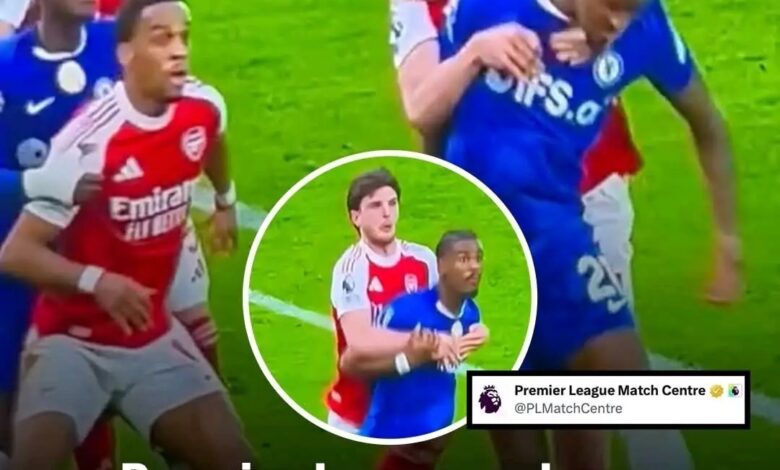
Inside the box, players from both teams fought fiercely for position. One of the most physical battles involved Declan Rice and Jorrel Hato.
Both players were locked together, arms wrapped around each other as they tried to win the ball. This kind of physical contest is common during corners, but what happened next immediately sparked controversy.
As the ball dropped into the area, Rice slightly leaned toward it. At that moment, the ball appeared to strike his arm.
For a split second, everything froze.
Then Chelsea players began shouting loudly, raising their arms and demanding a penalty. From their perspective, it looked like a clear handball inside the box.
The away supporters also erupted in anger, convinced their team had been denied a clear opportunity.
Meanwhile, the ball was still in play, and Arsenal goalkeeper David Raya had to react instantly. The ball deflected dangerously toward goal, forcing Raya to produce an excellent save to keep it out.
While Raya dealt with the immediate danger, Chelsea players surrounded referee Darren England. They pleaded passionately for a penalty decision.
The referee listened briefly but quickly waved away the appeals.
That decision immediately triggered another wave of frustration from Chelsea players and supporters. Many of them believed the evidence was obvious.
However, the referee knew that technology was there to support him if necessary.
The incident was automatically checked by the Video Assistant Referee system — widely known as VAR. The official reviewing the footage was John Brooks.
While the players waited anxiously, the stadium screens did not show the replay, leaving fans guessing about what the VAR officials were seeing.
Moments later, the message arrived.
After reviewing the footage, VAR confirmed the referee’s original decision: no penalty.
The match continued.
But the debate was only beginning.
Shortly after the incident, Chelsea finally managed to equalize. Ironically, their goal also came from a corner situation.
The ball was delivered into the box, and in the chaos that followed, Arsenal defender Piero Hincapie accidentally turned the ball into his own net.
Chelsea players celebrated wildly. After the earlier controversy, this goal felt like justice to them.
The first half ended with the score level, but emotions were still running high.
During halftime, television pundits and commentators began discussing the handball incident in detail. Replays from multiple angles were shown, and opinions quickly started to divide.
Some experts believed Chelsea had been unlucky.
Others felt the referee and VAR had applied the rules correctly.
One of the most vocal opinions came from former Arsenal striker Ian Wright.
Watching the replay, Wright admitted that Arsenal might have been fortunate.
From his perspective, the contact between the ball and Rice’s arm looked significant enough to justify a penalty. His reaction echoed the feelings of many Chelsea fans who were still angry about the decision.
But not everyone agreed.
Former Chelsea striker Daniel Sturridge offered a different interpretation while analyzing the incident on television.
Sturridge acknowledged that the ball did touch Rice’s arm. However, he believed the context of the situation was extremely important.
According to him, Rice was locked in a physical battle with Hato when the ball arrived. Both players were pushing, pulling, and trying to gain position — something that happens constantly during corners.
Sturridge suggested that awarding a penalty in that situation would have been very harsh.
In his words, it would have been a “soft” decision.
He also praised Raya’s quick reflexes, highlighting how the goalkeeper reacted brilliantly to stop the ball after it made contact with Rice.
From Sturridge’s perspective, the moment served as a warning sign for Arsenal rather than a clear refereeing mistake.
After halftime, the match resumed with both teams still believing they could win.
Arsenal gradually regained control of the game. Their midfield players moved the ball quickly, stretching Chelsea’s defensive shape and forcing mistakes.
Eventually, the decisive moment arrived.
Once again, a corner caused chaos in the penalty area. This time, however, Chelsea’s goalkeeper made a costly error.
Robert Sanchez moved out of position at exactly the wrong moment, leaving space behind him. Arsenal defender Jurrien Timber reacted fastest, rising above everyone else to head the ball into the net.
The stadium erupted again.
Arsenal had restored their lead.
Chelsea’s frustration continued to grow, and the situation became even worse for them later in the match.
Winger Pedro Neto received two yellow cards in quick succession — both for reckless challenges.
Within just three minutes, he was sent off.
Suddenly Chelsea were down to ten men.
From that point forward, Arsenal controlled the game more comfortably. With an extra player and a one-goal advantage, they focused on protecting their lead and managing the final stages of the match.
Chelsea tried to push forward despite being a man down, but their attacks lacked the sharpness needed to break through Arsenal’s organized defense.
When the final whistle eventually arrived, Arsenal had secured a 2-1 victory.
For the home supporters, it was another massive step in their push for the league title.
But even after the match ended, the main talking point remained the same: the handball incident involving Declan Rice.
Shortly after the game, the Premier League released an official explanation through its Match Centre account.
According to the statement, the referee’s decision not to award a penalty had been carefully reviewed by VAR.
The review concluded that Rice was involved in a physical challenge with an opponent when the ball struck his arm.
Because of that context, the officials determined that the contact did not qualify as a punishable handball offense under the current rules.
Therefore, the referee’s on-field decision was confirmed.
Even with that explanation, the debate among fans and pundits continued long after the final whistle.
Chelsea supporters remained convinced that their team had been denied a clear penalty.
Arsenal fans, on the other hand, argued that the decision was correct and consistent with the interpretation of handball rules in modern football.
Moments like this are part of what makes the Premier League so dramatic.
Every week, matches produce moments of brilliance, controversy, and debate. Decisions made in seconds can become the focus of discussion for days or even weeks afterward.
For Arsenal, however, the most important thing was the result.
Three points against a strong rival kept their title hopes alive and maintained their momentum during a crucial part of the season.
For Chelsea, the match was another reminder of how small moments can change everything.
A potential penalty decision, a defensive mistake, and a red card combined to turn a competitive match into a painful defeat.
And for fans across the football world, the incident involving Declan Rice became yet another example of how complex and controversial refereeing decisions can be in modern football.
Whether people believed it was a penalty or not, one thing was certain: it was a moment that nobody watching the match would forget anytime soon.