Pep Guardiola may have a SERIOUS squad on his hands… but is this starting XI strong enough to dominate England AND conquer Europe

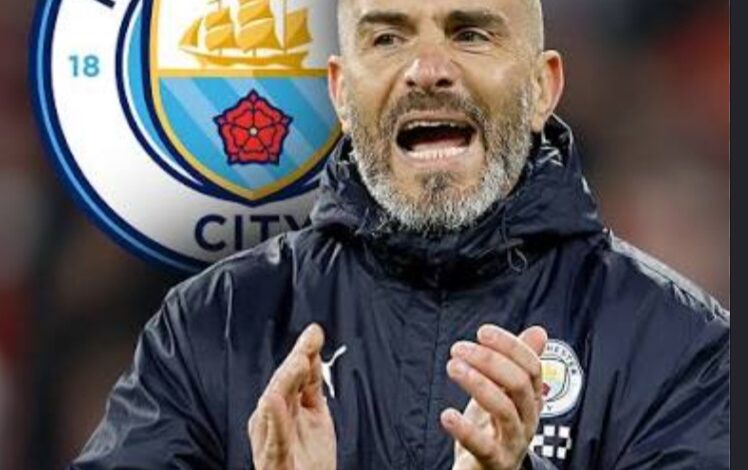
Manchester City are walking into the most uncertain campaign of the last decade, and the question every fan, pundit, and rival supporter is asking right now is simple: can this rebuilt squad, under a brand-new manager, actually go and win both the Premier League and the Champions League in the same season? It sounds almost absurd to even frame it that way after the summer City have had, but this is still Manchester City we are talking about, a club that has been engineered for a decade to compete on every front, and even in transition they cannot be dismissed lightly. The scale of change at the Etihad this summer has been seismic. Pep Guardiola, the most successful manager in the club’s history, has departed after ten trophy-laden years, taking with him six Premier League titles, a historic treble, and the identity that defined an era of English football. In his place steps Enzo Maresca, the former Chelsea boss and one-time Guardiola assistant, tasked with an almost impossible job: keep City relevant at the very top while fundamentally reshaping a squad that has lost several of its most important characters in the space of a few months.
The exits alone tell you how different this City side is going to look and feel. John Stones and Bernardo Silva have both left as free agents, two players who were central to the identity Guardiola built, comfortable on the ball, tactically flexible, trusted in the biggest moments. Losing both in the same window is a huge blow to the dressing room’s experience and know-how. Then there is the departure that will sting hardest of all for City fans: Rodri, the reigning Ballon d’Or winner and arguably the most important defensive midfielder in world football over the last few seasons, has completed a move away from the club, a decision that leaves an enormous hole in the base of the team. Rodri was not just a player who won City the ball back; he was the metronome who dictated tempo, controlled matches, and allowed the front six the freedom to be creative. Replacing that level of control is close to impossible with a single signing, no matter how much money is spent. On top of that, Savinho has moved on to Tottenham, stripping away another source of width and unpredictability that Guardiola leaned on heavily in his final seasons.
To try and plug these gaps, City have gone big, smashing their own transfer record in the process. Elliot Anderson has arrived from Nottingham Forest for a reported £116 million, comfortably surpassing the previous record fee City paid for Jack Grealish. Anderson is not a direct swap for Rodri stylistically, he is a more progressive, box-to-box midfielder who thrives on carrying the ball forward and arriving late in the box, but he is coming off an outstanding season for Forest and started every game for England at the World Cup, which tells you everything about the level he is currently playing at. Maresca appears to be handing him a central role in midfield, potentially partnering alongside whichever holding player is deployed in a more disciplined role. It’s a bold bet: City are essentially betting that Anderson’s ceiling as an all-action, modern midfielder outweighs the loss of Rodri’s more specialized skill set. Alongside Anderson, City have also brought in younger, more speculative attacking additions in Mathys Detourbet from Troyes and Jeremy Monga from Leicester City, both signed with an eye on the medium to long term rather than instant first-team impact, though Monga in particular has generated buzz given his performances as a teenager in the Premier League last season.
What City retain, crucially, is still an extraordinarily talented core. Erling Haaland remains one of the most ruthless goalscorers in world football, and as long as he stays fit and service keeps arriving into the box, City will always have a route to goals regardless of how much midfield control they’ve lost. Phil Foden is still there, still capable of the kind of moments that turn matches in an instant, and his ability to drift between the lines gives Maresca a genuine creative outlet even without Bernardo Silva’s guile. Rúben Dias remains one of the best defensive leaders in Europe and has been entrusted with the captaincy, a signal that City still see him as the emotional and tactical anchor of this new-look side even amid all the turnover elsewhere. Joško Gvardiol offers both defensive solidity and attacking overlap from left-back, one of the more versatile pieces in the squad, while Rico Lewis continues to develop into exactly the kind of hybrid full-back-midfielder that modern City sides have always valued. Omar Marmoush, now wearing the number 7 shirt as a statement of intent, adds further firepower and direct running to the frontline, even as reports link him with interest from Atletico Madrid. Add in players like Matheus Nunes, who offers positional versatility across midfield and defence, and Jeremy Doku, whose one-on-one dribbling remains a genuine weapon against low blocks, and there is still more than enough individual quality here to compete at the top end of both competitions on paper.
The bigger question, though, isn’t about individual quality, it’s about system and cohesion, and this is where the doubts start to creep in. Preseason has not been kind to Maresca’s early messaging. City lost on penalties to Inter Milan in Hong Kong after a 1-1 draw, a result that on its own means very little in August, but the manner of some of the performances raised eyebrows. Far more alarming was the 3-0 defeat to Arsenal in the Community Shield at the start of the season, a genuinely chastening afternoon where City looked second best for long stretches against the reigning Premier League champions. Riccardo Calafiori scored inside the first minute, Kai Havertz doubled the lead before the half-hour mark, and Martin Odegaard added a third shortly after half-time. It was the kind of result that, while officially just a curtain-raiser with no real trophy significance in the long run, exposed exactly the issues City are wrestling with: a defence still finding its shape without Stones, a midfield still searching for its new identity without Rodri, and a manager still trying to implement his own tactical principles onto a group of players who spent the best part of a decade being drilled in someone else’s system. To his credit, Maresca has been honest about the scale of the challenge, acknowledging openly that changing not just the manager but multiple foundational players in the same summer inevitably creates short-term instability, and asking supporters for patience as his ideas bed in.
That patience may be in short supply, though, because City have not actually won the Premier League since 2024, and they finished a full seven points behind Arsenal last season despite still picking up a domestic cup double. The Gunners have now beaten them in the Community Shield as well, extending a pattern where Arsenal look like the team to catch rather than City looking like the standard everyone else measures themselves against. That is a genuinely new psychological dynamic for a club that has dominated English football for the better part of a decade, and it’s fair to ask whether a rebuilding City side, learning a new manager’s principles from scratch, can realistically leapfrog a settled, in-form Arsenal side that already has the psychological edge over them. Liverpool, Chelsea, and a resurgent Manchester United under new management elsewhere in the league only add to the competitive picture, meaning City cannot simply assume their financial muscle and squad depth will be enough to see off the chasing pack the way it often was in the peak Guardiola years.