Manchester United Face Crucial Transfer Window as Carrick Targets Long-Term Revival

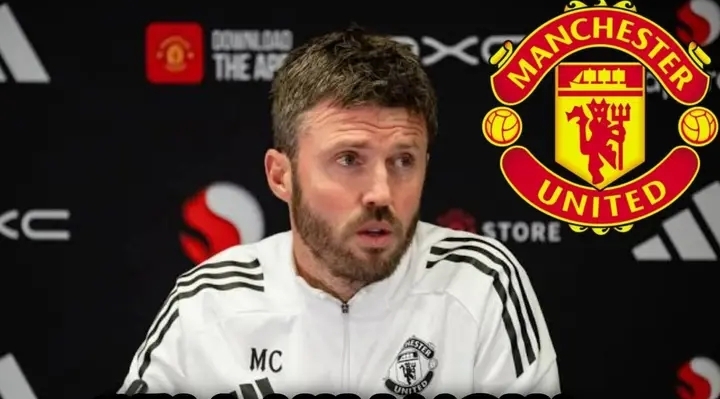
Manchester United are approaching what could become one of the most significant transfer windows in the club’s modern history, with decisions made this summer likely to influence their progress for years to come. There is a growing sense around Old Trafford that this is not merely about strengthening a squad for the upcoming campaign but about laying the foundation for a sustainable future.
Unlike previous transfer periods that were often characterised by uncertainty and short-term solutions, the club now appears to be operating with a clearer vision. The arrival of Michael Carrick has brought greater emphasis on long-term planning, squad harmony and the development of a distinct tactical identity.
The return of European football has added another layer of complexity to United’s preparations. Carrick must build a team capable of competing across multiple fronts, with a demanding schedule that could stretch close to 60 matches. As a result, recruitment is no longer focused solely on marquee signings but on assembling a balanced squad with the depth required to maintain consistency throughout an entire season.
There is also increasing awareness within the club that transfer mistakes can no longer be afforded. Many believe this summer could shape the next five or six years of Manchester United’s trajectory, making every recruitment decision crucial. Carrick’s task extends beyond coaching; he is expected to help guide a transfer strategy that delivers long-term stability after years of inconsistent spending.
One recurring concern is the need to address midfield shortcomings. In recent seasons, United have often possessed dangerous attacking players but lacked the control and composure in central areas needed to dominate top-level opponents. Reports linking the club with several midfield targets suggest a deliberate effort to reshape the heart of the team rather than simply adding individual talent.
Midfield reconstruction has become the centrepiece of United’s plans. The expected arrival of Ederson is viewed as an important step, but not the complete solution. His energy, physicality and work rate are seen as valuable assets, yet the club appears to be seeking a more balanced midfield unit with different skill sets. The ideal structure would combine ball-winning ability, creativity, defensive awareness and control of possession.
This explains why players such as Aurélien Tchouaméni, Carlos Baleba and Matías Fernández continue to be linked with the club. United’s recruitment strategy seems focused on creating complementary partnerships rather than collecting players with similar attributes.
Carrick’s preference for versatile footballers also aligns with this vision. Flexible players capable of adapting to different tactical systems are increasingly valuable, especially for teams competing in domestic and European competitions simultaneously. Depth and adaptability could prove just as important as the quality of the starting eleven.
Another encouraging sign is the club’s apparent willingness to act decisively in the transfer market. Rather than waiting until the final weeks of the window, United have been linked with early negotiations, allowing them to secure key targets before prices rise or competition intensifies.
There is also a belief that English football is entering a period of transition. With rival clubs undergoing their own changes, Manchester United see an opportunity to close the gap on the Premier League’s leading sides. Many within the club feel the foundations are already in place, with the primary challenge being the creation of a more balanced and tactically cohesive team.
The atmosphere around Old Trafford is reportedly more stable than in previous years, with fewer distractions and a stronger sense of direction. Such stability can be vital during a rebuilding process, making the club a more attractive destination for prospective signings.
However, significant risks remain. Large transfer fees alone do not guarantee success, and even talented players can struggle if they are not suited to the system or the demands of English football. That is why this summer may prove pivotal for Carrick’s long-term project. His reputation and the club’s future progress could depend heavily on whether these recruitment plans translate into a cohesive and competitive squad.
For years, Manchester United have often prioritised excitement over structure in the transfer market. This summer feels different because the focus appears to be on balance, chemistry and tactical compatibility. If the club gets those decisions right, they could accelerate their return to the summit of English and European football. If not, another costly rebuilding cycle may await. That is what makes this transfer window so important—not just for the upcoming season, but for the future direction of Manchester United under Michael Carrick.