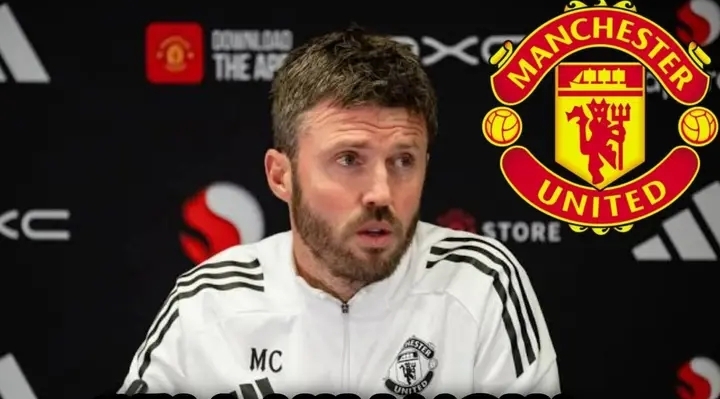
Manchester United appear to be entering a fresh chapter after reportedly confirming Michael Carrick as the club’s permanent head coach, a move that signals a blend of stability and long-term ambition. The decision follows his period in temporary charge, where he gradually helped steady performances and guided the team back into serious discussions surrounding Champions League qualification.
The appointment has generated significant discussion throughout English football, not only because of the change in leadership but also because of what it could mean for Manchester United’s broader future. It has reopened debates about whether maintaining continuity within the club can be more beneficial than pursuing an established elite manager from outside.
Carrick’s time in charge initially attracted mixed opinions. Many observers remained cautious due to previous experiences with internal appointments at Old Trafford, but his work in restoring balance and improving results appears to have strengthened belief among the club’s decision-makers. That growing confidence is believed to have played a major role in securing his position on a long-term basis.
Football analysts and former professionals remain divided in their views. Some believe Carrick’s understanding of Manchester United’s culture and environment provides a unique advantage, while others question whether familiarity alone can succeed in a competition as demanding and tactically advanced as the Premier League.
Naturally, comparisons have emerged with previous managerial transitions following Sir Alex Ferguson’s departure. Those years were often marked by short-lived optimism followed by inconsistency, making this latest decision subject to even greater attention and expectation.
Supporters of Carrick’s promotion have pointed toward his managerial journey outside Old Trafford, especially his time at Middlesbrough. That experience is seen as an important stage in his development, allowing him to gain practical lessons and shape his tactical identity before taking on the pressure that comes with leading Manchester United.
The move also appears to reflect a deeper shift in philosophy at the club. Rather than opting for dramatic changes from outside, Manchester United seem focused on rebuilding through internal understanding and a stronger connection to the club’s traditions and values.
Reports suggest Carrick has already earned positive reactions within the dressing room. Strong relationships with players and trust within the squad can be especially valuable during transitional periods where tactical plans require complete commitment.
The reported five-year agreement also hints at a broader change in approach from the hierarchy. Instead of short-term reactions based on immediate results, the club appears to be embracing a project built around long-term growth and patience.
On the pitch, Carrick is viewed as a coach who prioritises control and organisation. His methods are believed to focus on structured build-up play, positional discipline, and smoother transitions, characteristics that mirror his own style as a midfielder during his playing days.
There are already indications that he wants to move the team away from the unpredictable and chaotic phases that occasionally affected previous performances. Instead, there seems to be an emphasis on creating a clearer tactical identity where players understand their roles and movements within a defined system.
Even so, important questions remain. Early progress can create optimism, but maintaining those standards over an entire Premier League season presents a very different challenge, particularly when facing highly established teams with refined systems.
The makeup of the current squad creates another issue to solve. A combination of experienced players and younger talents offers potential but also raises concerns about balance and consistency. Carrick will likely face major decisions regarding which players fit his long-term vision.
Youth development could become an important part of that process. Manchester United have always carried a reputation for trusting emerging talent, and Carrick appears willing to continue that tradition. However, relying on younger players can naturally bring inconsistency, especially during high-pressure moments.
Balancing long-term development with immediate expectations remains one of the club’s biggest challenges. While building a future requires patience, Manchester United are also expected to compete for trophies and deliver results.
Mental management may become just as important as tactics. Carrick’s calm personality has often been highlighted as a positive influence, but there will also be expectations for him to show authority and make difficult decisions when performances fall below standard.
The competitive level of the Premier League adds further pressure. With rivals becoming increasingly efficient and organised, consistency and adaptability have become essential qualities for success.
Transfer activity will also play a huge role in shaping this project. Future recruitment decisions could reveal how much influence Carrick has in building a squad suited to his football philosophy. Likewise, moving on players who do not fit the system may prove equally important.
Champions League football, if achieved, would introduce another challenge entirely. Competing across multiple competitions demands squad depth, tactical flexibility, and the ability to manage pressure over a long season.
For now, Manchester United’s direction under Carrick remains a developing story. The club may have taken a calculated step toward rebuilding its identity, but the true measure of success will come through results, progression, and whether early signs of promise can eventually translate into sustained achievements.


