THE BIDDING WAR HAS BEGUN for Manchester United F.C. — with THREE billionaire groups emerging as shock contenders in a staggering $7B takeover battle

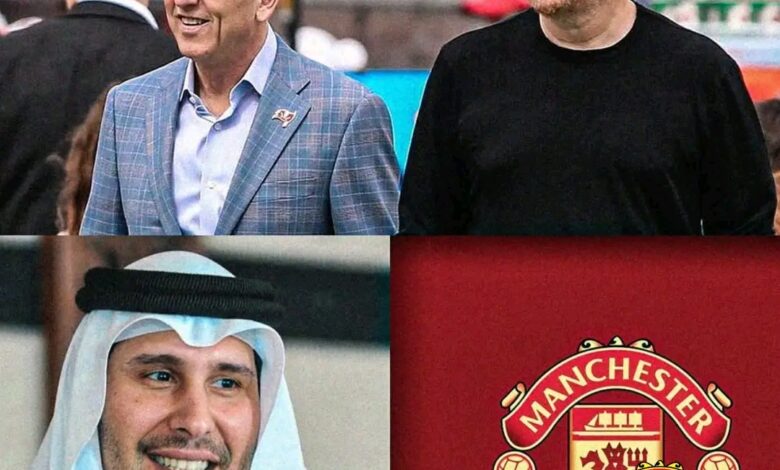
The story of Manchester United’s ownership under the Glazer family has been defined by fan unrest, financial strain, and recurring takeover speculation ever since their controversial acquisition in 2005. Now, nearly twenty years on, reports from The Athletic indicate the family may be moving seriously toward a full sale, with a loose deadline of February 2027 in mind to secure the best possible price. Potential buyers reportedly include Qatari royalty, UAE and Saudi investment groups, and major private equity firms — and for long-suffering United supporters, the prospect of a clean break has never felt more real.
**How It All Began**
When the Glazers completed their leveraged buyout in 2005, they turned a debt-free club worth roughly £790 million into one immediately burdened with £525 million in borrowed money secured against United’s own assets. By 2025, long-term debt had grown to over £650 million, while the family had drawn out approximately £1.16 billion in dividends over the years — all while the club posted significant financial losses, including a £113 million shortfall in 2023-24. On the pitch, three Premier League titles couldn’t mask a steep decline from the club’s former heights, with no Champions League win since 2008 and a gradual drift toward mid-table obscurity. Fan anger boiled over repeatedly, most visibly through the Green and Yellow protest movement and the backlash against the 2021 European Super League proposal.
**The Ratcliffe Factor**
In 2023, Sir Jim Ratcliffe and his company INEOS purchased a 27.7% minority stake for £1.3 billion, taking full control of football operations for £245 million. While this eased tensions somewhat, the Glazers retained 69% ownership along with Class B shares that give them disproportionate voting power. Crucially, Ratcliffe’s deal included a “drag-along” clause expiring in February 2027, which guarantees him the same per-share rate — at least $33 — in any sale of the Glazers’ stake. After that date, buyers could push for a lower valuation, potentially knocking hundreds of millions off United’s estimated £5-6 billion worth. Combined with £230 million in debt refinancing due in 2027 amid climbing interest rates, the Glazers have strong financial incentives to move before that window closes.
**Who’s In the Running**
Several high-profile parties have been linked with a potential purchase. Sheikh Jassim bin Hamad Al Thani of Qatar previously tabled a cash offer exceeding £5 billion in 2023 and is reportedly still interested. Abu Dhabi-connected groups, including those linked to the City Football Group, could draw on their existing Premier League knowledge to facilitate a smooth transition. Saudi Arabia’s Public Investment Fund, which took over Newcastle United in 2021, is believed to view United as a prestige global asset — a view seemingly confirmed by comments from Turki Al-Sheikh hinting at “advanced” discussions. Private equity heavyweights such as Carlyle Group and Apollo Global Management are also said to be watching closely, attracted by United’s £648 million annual revenue and vast worldwide fanbase.
**What a Sale Could Mean**
A change of ownership could prove genuinely transformative. Ratcliffe’s early reforms — including the appointments of CEO Omar Berrada and sporting director Dan Ashworth — have begun to stabilise the club’s structure, but full new ownership might unlock the kind of investment needed to overhaul the squad, fund a proposed £2 billion Old Trafford redevelopment, and restore the club to Champions League relevance under manager Ruben Amorim. The primary risks involve prolonged negotiations creating uncertainty that disrupts the ongoing rebuild, or a post-2027 scenario where the Glazers are forced to accept a lower offer. Nevertheless, with Ratcliffe’s clause providing some protection, a clean and orderly transition remains achievable.
For United’s supporters, this is about far more than boardroom dealings — it represents the possibility of finally closing the book on two decades of financial exploitation and mismanagement. Whether that new chapter is written by Qatari investment, Gulf state ambition, or private equity strategy, the sense that a turning point is approaching has rarely felt this tangible.