Manchester City have reportedly been warned that a 60-point deduction could be a reasonable punishment if they are found guilty of breaking Financial Fair Play (FFP) regulations

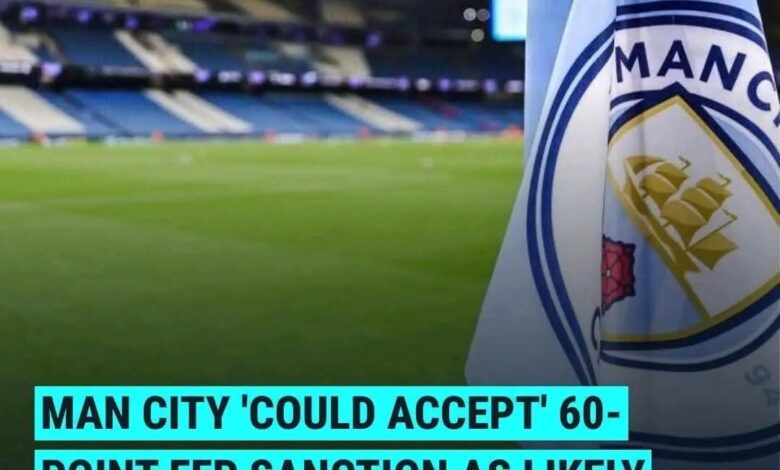
The story around Manchester City and the possibility of a huge points deduction has once again thrown English football into a storm of debate, fear, anger, and speculation. For months now the club has been living under a cloud as the Premier League continues its long and complicated investigation into the famous 115 financial charges. Fans across England are watching closely, rival supporters are hoping for severe punishment, and City fans are nervously waiting for the final verdict. Now a new voice has entered the conversation, and the message is dramatic. Some experts believe that if Manchester City are found guilty of breaching financial fair play rules, a 60-point deduction would actually make sense.
This idea alone has sent shockwaves through the football world. Sixty points is not a small punishment. It is not something that simply pushes a team down the table. A deduction of that size would completely destroy a club’s league season and possibly send them crashing out of the Premier League. To understand why such a massive punishment is even being discussed, we need to go back to the beginning of the entire controversy that has surrounded Manchester City for years.
The Premier League stunned the football world when it announced that Manchester City had been charged with more than one hundred financial rule breaches. These alleged breaches cover a long period of time stretching from 2009 to 2018. According to the league, City may have failed to provide accurate financial information about sponsorship deals, revenue, and the payment of managers and players. The charges also claim the club did not fully cooperate with the Premier League investigation that followed.
Manchester City strongly deny all the accusations. The club immediately released a statement saying they were surprised by the charges and confident they would prove their innocence. They insisted that their finances had been independently verified and that the truth would come out when the legal process is complete. The club also said they welcomed the chance to present what they called an irrefutable body of evidence.
But while the legal process continues, debate has not stopped. Former executives, financial experts, football administrators, and commentators have all offered their opinions on what should happen if Manchester City are eventually found guilty. Among these voices is former Everton chief executive Keith Wyness, who recently explained why a huge points deduction could be the most logical punishment.
Wyness believes that if the charges are proven, the scale of the alleged wrongdoing means the punishment must also be extremely serious. According to him, a points deduction of around sixty points could reflect the seriousness of the accusations while still allowing the club to remain in the league structure.
His argument is simple. If a team gained a sporting advantage by breaking financial rules over many seasons, then the punishment should remove that advantage in a dramatic way. A small fine would not be enough. Even a deduction of ten or twenty points might not truly reflect the magnitude of the charges if they are proven.
That is why the idea of sixty points is being discussed. It would be a punishment so heavy that it would shake the entire club and send a strong message to every other team in football.
To understand how devastating such a penalty would be, imagine a normal Premier League season. Most teams finish the season with between 40 and 70 points. Even many teams competing for the title finish with around 85 to 95 points. If a team suddenly lost sixty points, it would almost certainly drop them to the very bottom of the table.
Even if Manchester City had an incredible season and won many games, a sixty-point deduction would leave them fighting for survival or even certain relegation. It would be one of the most severe punishments ever seen in modern football history.
But Wyness is not saying this should happen for drama. He believes it would actually make sense from a football governance point of view. If the league wants to prove that financial rules matter, then the punishment must be strong enough to discourage future violations.
For many years, financial fair play rules have been a controversial topic. These regulations were introduced to stop clubs from spending far beyond their means. The goal was to create financial stability and prevent wealthy owners from dominating the sport by injecting unlimited money.
However, critics say the rules have sometimes been unclear or unevenly enforced. Some clubs have received fines, others have faced transfer bans, and some have managed to fight charges successfully through long legal battles.
Manchester City themselves have already experienced this before. In 2020, the club was banned from the Champions League by UEFA for alleged financial fair play breaches. That punishment would have kept them out of European football for two years. But City appealed to the Court of Arbitration for Sport, and the ban was eventually overturned.
That victory strengthened the club’s belief that they would also clear their name in the Premier League case. City argued that some accusations were time-barred and that the evidence was not strong enough to support the claims.
Despite that history, the Premier League case is different. The league has spent years collecting evidence and preparing the charges. The process is expected to involve an independent commission that will review huge amounts of financial data, emails, contracts, and testimony.
Legal experts say the hearing could last months, and the final decision may take even longer. This means the uncertainty surrounding Manchester City could continue hanging over the club for a long time.
During this period, the football world remains divided. Rival fans often say City should face the strongest possible punishment if the charges are proven. They argue that financial rules exist to protect fairness and competition.
Some supporters of other clubs believe Manchester City’s success over the last decade could have been influenced by financial advantages that other teams did not have. They say that if the rules were broken, the consequences must be serious.
On the other hand, Manchester City fans believe their club is being unfairly targeted. They point to the team’s incredible performances on the pitch under Pep Guardiola, arguing that success comes from brilliant coaching, smart recruitment, and world-class players.
They also say that many accusations are based on old information or misunderstandings about sponsorship structures. City supporters remain confident that the club will win the case and prove that the allegations are incorrect.
Pep Guardiola himself has repeatedly defended the club. The legendary manager has said he trusts the owners and believes the club has done nothing wrong. Guardiola even once said he would leave the club if the owners lied to him about the financial situation.
His loyalty has become an important symbol during this long controversy. The manager has continued to focus on football while the legal battle unfolds in the background.
Meanwhile, football commentators continue to speculate about possible punishments. If Manchester City were found guilty, the Premier League would have several options. These could include a heavy fine, a transfer ban, a points deduction, or even expulsion from the league.
Expulsion is considered the most extreme scenario and would require extraordinary circumstances. That is why some experts believe a massive points deduction might be the most realistic severe punishment.
A sixty-point deduction would not remove Manchester City from the football pyramid, but it would cause enormous sporting damage. The club would almost certainly face relegation, which would have major financial consequences.
Television revenue, sponsorship deals, and player contracts would all be affected. Some star players might want to leave, while others might stay to help the club rebuild.
Relegation would also change the balance of power in English football. Manchester City have been one of the most dominant teams of the last decade. Removing them from the Premier League, even temporarily, would reshape the title race.
Clubs like Liverpool, Arsenal, Manchester United, and Chelsea could suddenly see a major rival disappear from the competition. For smaller clubs, the absence of City might create new opportunities to climb the table.
But these are still only possibilities. The legal process has not yet reached its conclusion. Until the independent commission announces a final verdict, everything remains speculation.
Keith Wyness himself admitted that predicting the exact punishment is extremely difficult. He simply believes that if the charges are proven, the scale of the case means the punishment must be equally significant.
In his view, a sixty-point deduction is one of the few penalties that could truly reflect the seriousness of the situation while still allowing the club to remain part of the league structure.
This suggestion has sparked fierce debate. Some people believe it is fair, while others think it would be far too harsh.
Critics of the idea say that punishing the current players and fans for financial actions from years ago would be unfair. Many players in the current squad were not even at the club during the period being investigated.
They also argue that football is about competition on the pitch, and massive off-field punishments can damage the integrity of the league.
Supporters of strong punishment respond by saying that rules only matter if they are enforced. If clubs believe they can break financial regulations without serious consequences, then the entire system becomes meaningless.
This is why the Manchester City case has become one of the most important legal battles in modern football history. The final decision could shape the future of financial regulation in the sport.
If City are cleared of the charges, it will strengthen the club’s position and raise questions about the Premier League’s investigation process. But if the club is found guilty, the punishment could become a defining moment for football governance.
For now, players, fans, and managers must continue focusing on the game itself. Manchester City remain one of the strongest teams in Europe, competing for trophies and playing exciting football.
But behind every match, every goal, and every celebration, the shadow of the 115 charges still exists.
The idea of a sixty-point deduction may sound extreme, but it shows just how serious the conversation around financial rules has become. Whether such a punishment ever happens remains uncertain.
What is certain is that the final verdict will be watched by millions of people around the world. The outcome could change the future of Manchester City and possibly the entire Premier League.
Until that day arrives, the debate will continue, the speculation will grow, and the football world will keep asking the same question.
If Manchester City are found guilty, how far will the Premier League be willing to go to protect the integrity of the game?