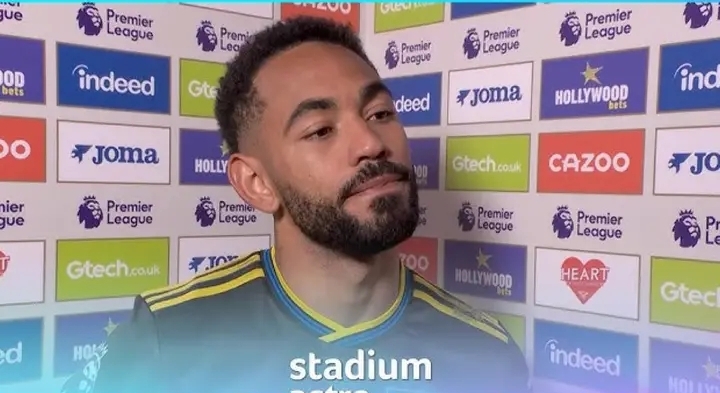
Manchester United may have secured a hard-earned 1–0 victory over Wolverhampton Wanderers at Molineux, but the narrow win did not fully disguise the internal frustrations that reportedly surfaced within the squad.
Despite collecting all three points, the performance left room for concern, with forward Matheus Cunha’s post-match demeanor quickly becoming a topic of discussion. Reports suggest the Brazilian was far from satisfied, particularly with the contribution of fellow attacker Benjamin Šeško.
While United managed to battle their way to victory in challenging conditions, their attacking play often lacked rhythm and sharpness — an issue Cunha is believed to have found especially frustrating. Known for his intensity, leadership qualities and tireless approach, Cunha cut an animated figure throughout the contest.
Broadcast footage repeatedly showed him expressing visible irritation, appearing to urge Šeško to increase his movement, urgency and overall involvement in the build-up. The young Slovenian striker, still adjusting to the speed and physical demands of the Premier League, struggled to make a significant impact and was largely peripheral during decisive attacking phases.
The clash with Wolves carried added importance for United as they continue to chase consistency after an up-and-down spell earlier in the season. Although the result was welcomed, it was evident that the team found it difficult to control possession or create clear chances from open play.
Cunha’s frustration reportedly stemmed from what he perceived as a lack of contribution from Šeško at moments when sharper link-up play and more decisive action were required in the final third. There were brief signs of Šeško’s potential, including moments of intelligent positioning and technical quality, but they were too infrequent to shift the flow of the game.
United often looked short of ideas against Wolves’ well-organised defensive block, relying more on set pieces or isolated individual efforts rather than sustained attacking pressure. For a player like Cunha, who thrives on fluid combinations and collective movement, the absence of chemistry was hard to overlook.
Cunha’s style is built around dragging defenders out of shape, creating space for teammates and knitting attacks together. That approach depends heavily on forwards who operate at a similar tempo and share the same attacking instincts. Šeško’s hesitation and difficulty in linking play may have disrupted that balance, leaving Cunha feeling disconnected despite his work rate.
From a coaching standpoint, the situation is unlikely to be ignored. Manager Erik ten Hag understands how crucial unity and understanding are within the attacking unit. Building effective partnerships takes time, repetition and trust, and upcoming training sessions are expected to place emphasis on improving coordination and movement between Cunha and Šeško.
It is also worth remembering that Šeško remains at an early stage of his Old Trafford career. Adapting to the Premier League can be demanding for young forwards, and inconsistency is often part of that learning curve. Many supporters and analysts still view him as a long-term asset, even if performances like the one at Molineux underline the challenges he faces.
While Cunha’s visible frustration has divided opinion, it could ultimately serve as motivation rather than a source of division. Honest, even emotional, feedback can sometimes push players to improve.
As the season progresses, attention will remain fixed on Manchester United’s attacking relationships and whether they can develop into a more fluid and clinical unit. Although the team celebrated an important away win, the underlying tension offered a reminder of the work still required.
Cunha and Šeško have the raw qualities to become a dangerous pairing, but unlocking that potential will depend on better communication, growing understanding and a shared commitment to meeting the demands of top-level football.