Alex Ferguson reveals what Man United did differently against Everton last night which they have never done this season

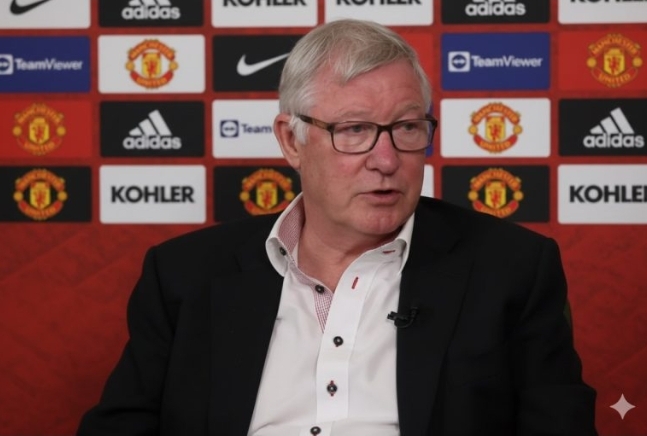
In the rich history of Manchester United, few figures command as much respect as Sir Alex Ferguson. The iconic former manager, who oversaw the most successful era the club has ever known, built his legacy on sharp tactical awareness and an extraordinary ability to recognize talent. Following United’s impressive 3-1 victory over Everton at Old Trafford, Ferguson once again found himself analyzing events from the sidelines — this time offering glowing praise for current boss Michael Carrick.
Speaking after the match, the revered Scotsman admitted he watched the contest closely and came away impressed by Carrick’s strategic clarity. He pointed out how organized and purposeful the team looked, noting that the structure and discipline on display reminded him of the dominant United sides of years gone by. According to Ferguson, Carrick’s instructions were clear, his approach balanced, and his players fully aware of their responsibilities.
Carrick, who once patrolled United’s midfield under Ferguson during his playing days, demonstrated a mature understanding of the tactical demands of top-level football. Deploying a 4-2-3-1 setup, he ensured his side controlled possession while remaining compact enough to deal with Everton’s threats. The shape offered defensive protection and at the same time freed the attacking players to operate with confidence and creativity — a balance Ferguson highlighted as vital in modern football.
United’s performance reflected meticulous preparation. From kickoff, they dictated the tempo, linking passes sharply and moving as a cohesive unit. The attacking line, spearheaded by Marcus Rashford, exploited gaps in Everton’s defense with intelligent movement and clinical finishing. Carrick’s demand for high pressing paid dividends as turnovers in advanced areas created scoring opportunities that ultimately sealed the result.
One moment in particular caught Ferguson’s eye — the fluid rotation among United’s midfield trio. The seamless exchange of positions disrupted Everton’s rhythm and allowed United to bypass their midfield resistance with ease. That kind of coordinated movement, Ferguson suggested, is a hallmark of elite teams. By encouraging flexibility and teamwork, Carrick emphasized collective responsibility — a principle long associated with Ferguson’s own philosophy.
At the back, United were equally assured. Led by Harry Maguire and Lisandro Martinez, the defense remained disciplined and alert, successfully limiting Everton’s counterattacking opportunities. Ferguson was quick to stress that defensive organization often goes unnoticed but is fundamental to winning important matches, particularly against opponents capable of breaking quickly.
Beyond formations and structure, Ferguson also admired Carrick’s rapport with his squad. Tactical blueprints mean little without belief, and United’s players appeared energized and fully committed. Carrick’s composed presence on the touchline seemed to instill confidence, blending strategic intelligence with emotional awareness — qualities Ferguson himself long championed.
As the final whistle confirmed an emphatic victory, the triumph felt symbolic as much as it was practical. For Ferguson, what he witnessed was more than three points; it was a glimpse of managerial promise. He expressed confidence that if Carrick continues to evolve at this rate, he has every attribute required to restore Manchester United to the summit of English football.
Under the lights of Old Trafford, where echoes of past glory still linger, Carrick’s growing authority on the bench offers renewed optimism. With the endorsement of Sir Alex Ferguson, belief is building that a new chapter of success could be unfolding — guided by a familiar philosophy, but shaped by a new generation at the helm.